
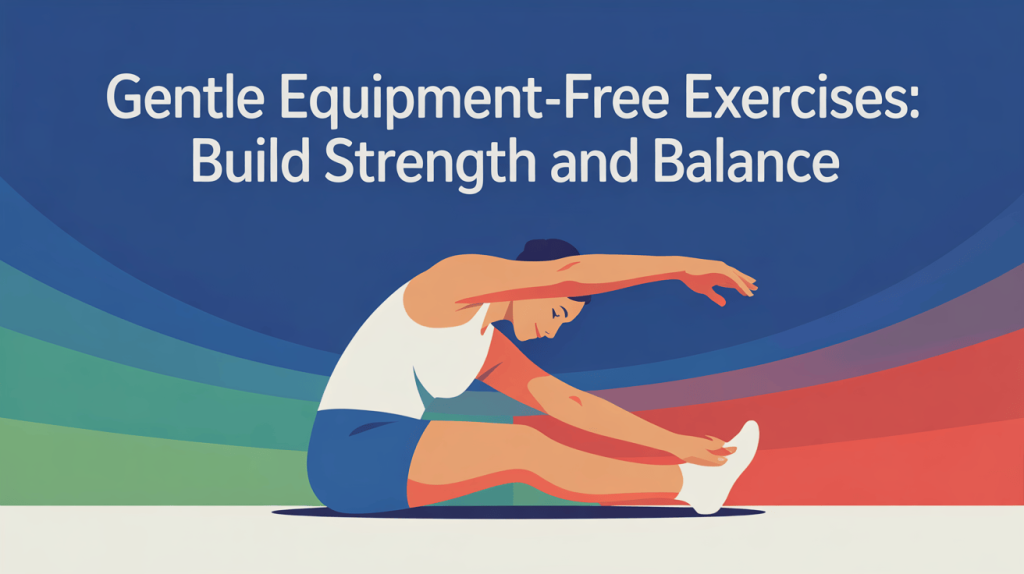
The journey toward improved mobility does not require expensive devices or complicated routines. Often, the simplest approach—mindful, gentle exercises—can steadily build strength and confidence while respecting your body’s current limits.
Whether you’re recovering from an injury, managing a chronic condition, or looking to maintain mobility as you age, these equipment-free methods can fit into any setting. They cost nothing, can be customized to your needs, and support greater awareness of how your body moves.
Below, discover how targeted, intentional movement can enhance strength, balance, and overall quality of life, one careful step at a time.
Key Benefits of a Gentle Equipment-Free Approach

Accessibility and Inclusivity for All Ages
Exercises that use your own bodyweight remove many barriers—no special tools, no gym memberships. This makes them ideal for everyone, regardless of income or living situation. For older adults, these gentle practices can be adapted as mobility evolves. A comprehensive home safety checklist helps create an environment that encourages secure, gradual movement progressions.
Cost-Saving, Low-Tech Advantages
Revisiting bodyweight-based routines can be refreshing in an era of expensive gadgets. This approach relies on your natural resistance, eliminating the intimidation factor of complex machines. You can address multiple muscle groups at once without specialized equipment.
Confidence Through Mindful Movement
Stripping away gear fosters deeper awareness of your body. Paying attention to how you move can build self-assurance: You learn to sense when something feels off, make small adjustments, and move through daily life more efficiently. This kind of body awareness is invaluable for staying mobile and independent.
Basic Safety and Preparation
When to Check with a Professional
Although gentle moves are generally safe, certain conditions call for professional input before you begin—recent surgeries, unstable heart conditions, uncontrolled high blood pressure, or frequent falls. A physical therapist can customize suggestions to fit your situation.
Setting Up Your Space Safely
Before starting, prepare a clear, well-lit area free of hazards. Use non-slip surfaces, and have a sturdy chair or wall nearby for support. Proper clothing that won’t snag is important. For more tips on safe environments, see how to stay safe while exercising at home.
Breathing and Mindful Movement Principles
A strong foundation includes breathing well and moving with intention. Do not hold your breath—keep a relaxed rhythm. Honor your limits: mild discomfort can be okay, but sharp pain means stop. Start small, build steadily, and celebrate subtle improvements in flexibility and ease.
Warm-Up Essentials
Chair or Wall-Assisted Stretches
Gentle stretches can prepare your body and lower injury risk. For instance, a seated neck stretch or a wall chest stretch—done with good posture—helps loosen tight areas while keeping you balanced. These safe home exercises for beginners ease you in without straining muscles or joints.
Neck, Shoulder, and Ankle Rolls
Simple, circular movements warm up your joints. Slowly roll the neck (or do half-circles if neck issues exist), rotate shoulders forward and back, and move each ankle clockwise and counterclockwise. Go gently to avoid discomfort.
Gentle March in Place
Light marching transitions you from static stretching to mild activity. Stand near support if needed, lift each knee as high as comfortable, and continue for 30–60 seconds. If balance is limited, do this from a sturdy chair. Prioritize control over speed.
Foundational Exercises Without Equipment
Chair Sit-to-Stand
This routine mimics everyday movements like rising from a seat. Sit on a solid chair, scoot near the edge, lean forward slightly, and press through your heels to stand. Keep your form steady, and lower slowly. Repeat about 8–12 times or as tolerated.
Wall Push-Ups
For upper-body strength with minimal wrist and shoulder stress, face a wall at arm’s length, place your palms flat at shoulder height, then bend your elbows to bring your chest in. Push back to upright. Adjust distance to the wall for comfort.
Ensuring correct alignment is key to safety. If concerns arise, consider insights on home therapy safety from professionals, but trust your instincts about pain or form.
Seated Marching
Sitting near a chair’s edge, tighten your core by drawing your navel inward, then raise one knee without leaning back. Lower gently and alternate. This engages hip flexors and the core without straining the spine or joints.
Half-Squat or Mini Lunge
Using a stable surface for balance, bend your knees slightly as if beginning to sit. Even a quarter-depth movement helps strengthen legs. Alternatively, step forward a small amount, bending both knees gently to ease into a mini lunge. Aim for controlled motion over deep range.
Balance and Core Engagement

Single-Leg Stand with Support
To bolster ankle, knee, and hip stability, shift weight onto one foot while lightly holding a chair or wall. Lift the other foot slightly, hold 10–30 seconds, then switch sides. Over time, reduce reliance on the support.
Seated Core Tightening
Core strength supports posture and helps prevent back strain. Sit tall, engage abs by drawing your navel inward, then lean back slightly for a brief hold. Keep shoulders down, breathe steadily, and focus on abdominal activation.
Toe-to-Heel Walking
Challenge your balance by placing one foot’s heel directly in front of the other foot’s toes. Move along a countertop for support. Keep posture upright and gaze ahead. Slow pacing can heighten coordination in ankles and feet.
Cooling Down and Stretching
Upper-Body and Lower-Body Cooldown
After activity, gradually lower your heart rate with gentle rolling motions. Rotate your shoulders, circle your arms, and turn your head side to side. For the lower body, a slow march in place can help transition from exercise to rest.
Deep-Breathing Session
End your session by inhaling for a count of four, pausing briefly, then exhaling for six. This eases tension and fosters relaxation. If you can, bring awareness to how your abdomen moves with each breath.
Floor or Bed-Based Stretches
If safely getting on and off the floor is possible, knee-to-chest or gentle spinal twists can further reduce tightness. Remember to move slowly into and out of these positions. If floor work isn’t feasible, do similar stretches on a firm bed.
Progress Tracking and Motivation
Emphasizing Time Over Repetitions
Focus on consistent effort rather than hitting exact repetition goals at first. Begin with 5–10 minutes of slow, mindful movement daily. Gradually add minutes as your body adapts.
Using a Mobility Journal
Write down how you feel before and after each session. Note improvements or lingering stiffness. Tracking progress keeps you motivated and reveals which exercises support you best.
Increasing Duration or Intensity
Expand your routine in small increments: add 1–2 minutes weekly or an extra repetition per exercise. Subtle changes let you adapt safely. Over time, you can carefully reduce reliance on supports or deepen certain stretches.
If you remain unsure or face challenges, consider thoughts on homemade equipment for those who might use minor tools, but approach any additions with caution.
When to Seek Guidance
Identifying Pain or Swelling
Longer-lasting pain or swelling is a warning. Muscle soreness can be normal, but if discomfort persists beyond a couple of days, consult a professional. Significant swelling or sharp pain also signals the need for expert evaluation.
Red Flags to Watch For
Stop and get help if you experience persistent dizziness, numbness, sudden weakness, or anything that feels acutely alarming. These symptoms could point to underlying medical issues needing immediate attention.
When a Licensed Therapist Is Essential

Injuries, post-surgery rehab, neurological conditions, chronic pain, and severe balance challenges typically require hands-on therapy. Even if you choose these gentle moves, integrate them under professional guidance when dealing with complex issues.
For deeper customization, consider getting a customized home program from a licensed PT who aligns each exercise with your personal recovery plan.
Conclusion and Encouragement
Key Takeaways
Gentle, equipment-free routines can form the core of a safe exercise plan. With stable surfaces, mindful breathing, and gradual increases, you can maintain flexibility and strength without special gear. Focus on consistent movement, watch for warning signs, and celebrate subtle gains.
A Stepping Stone to Greater Activity
This approach prepares you for broader fitness activities. As you refine core stability and develop awareness, you may branch into more advanced workouts or remain content with these foundational practices that support everyday mobility.
Progress often shows in small ways—a smoother morning routine, less stiffness bending down, easier transitions between positions. Recognize each improvement as a positive step toward sustaining overall well-being.
Building Confidence Through Awareness
Consistent, reflective practice builds your intuition about how your body responds to different movements. This knowledge helps you adapt safely, prevents injuries, and increases your confidence in everyday tasks.
Even a short daily commitment can bring lasting change. Start small, listen to your body, and appreciate each bit of progress. Movement, approached kindly, becomes a powerful ally for better health.
If you need more structured ideas, check out safe home exercises for beginners that reinforce these core strategies. Over time, these simple yet effective exercises become second nature, helping you stay active, comfortable, and in tune with how your body moves.
